 (Image source: Gemini)
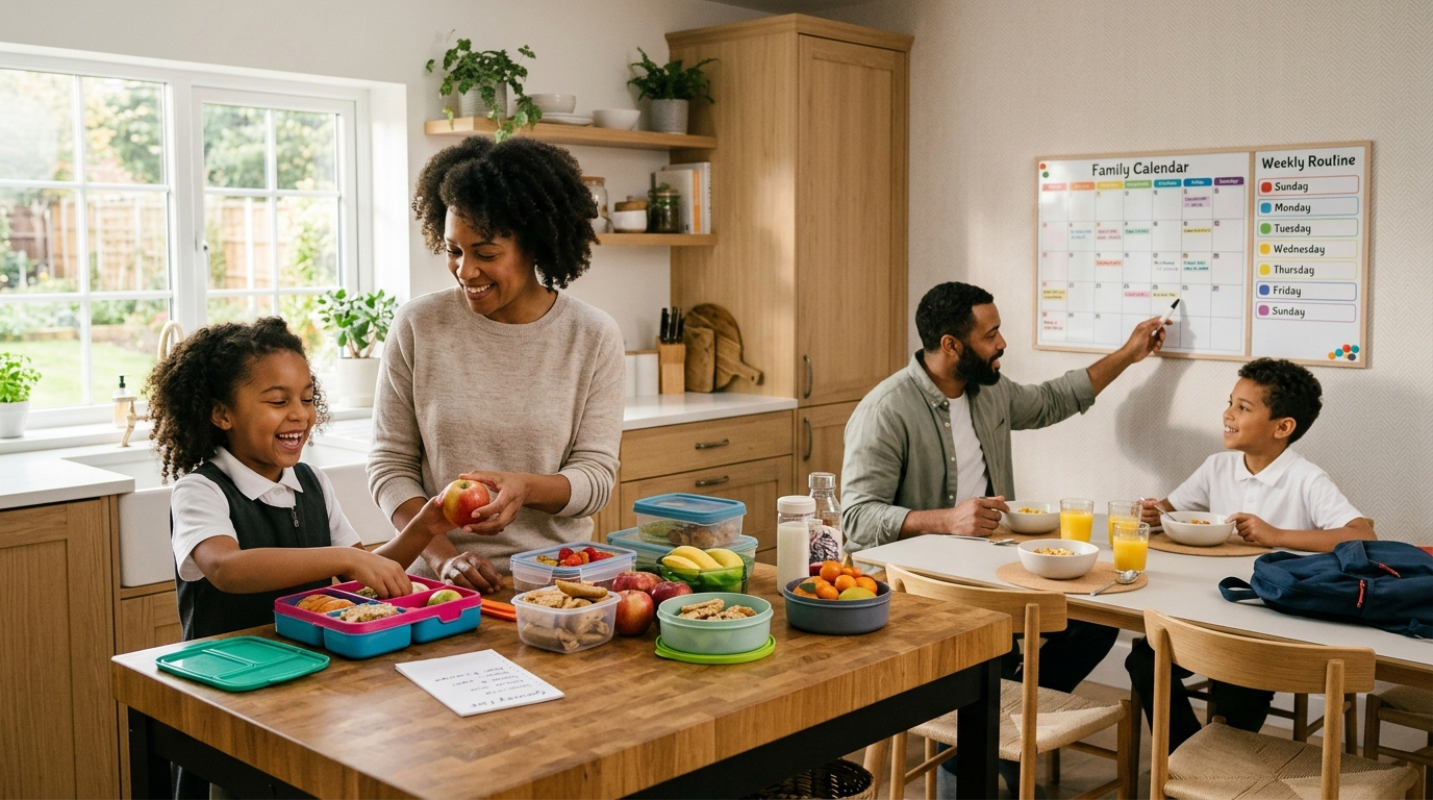
 Have you ever felt like your morning is a race you've already lost before you even find your car keys? We've all been there. It's now 2026, and while technology was supposed to make our lives easier, the mental load of managing a modern household feels heavier than ever. The secret to a home that doesn't feel like a chaotic transit station isn't found in expensive organizing gadgets or a drill-sergeant mentality. It's found in the quiet power of routine. When you build predictable rhythms, you're not just tidying up your kitchen. You're actually rewiring your family's stress response.
The Psychology of Routine
There's a big difference between a rigid schedule and a flexible rhythm. A schedule is a taskmaster that makes you feel guilty when you're five minutes late. A rhythm is a flow that helps your family move through the day without having to reinvent the wheel every hour.
When your environment is predictable, your brain can finally relax. For both kids and adults, knowing what comes next lowers cortisol levels. According to the American Academy of Pediatrics, these routines help children develop executive function, which includes needed skills like self-control and working memory.¹
Think of it like habit stacking. This is the practice of hitching a new habit to an existing one. If you always put your keys in the same bowl the second you walk through the door, you're using an existing action to trigger a productive one. It saves your "brain power" for the big stuff.
Predictability acts as a psychological safety net. In fact, a 2024 meta-analysis showed a 47% reduction in behavioral problems in preschoolers when their homes had high-consistency routines. When kids aren't wondering when they'll eat or sleep, their prefrontal cortex can focus on learning instead of just surviving the day.
Streamlining the Morning and Evening Rush
The most stressful parts of the day are usually the transitions. The "morning scramble" and the "bedtime battle" can drain your energy before the day even starts or ends. To fix this, you need to reduce decision fatigue by automating as much as possible.
One of the best tools is the "launchpad." This is a designated spot near the door where everything for the next day lives. Bags, shoes, keys, and signed permission slips go here every night. Productivity experts found that this one move reduces morning friction by about 20 to 30 minutes.
Then there's the power of the 10-minute evening reset. Instead of a massive Sunday deep clean, spend 10 minutes as a family every night tidying the common areas. This simple act has been shown to reduce morning stress levels by 50%. It's much easier to start your day when you aren't greeted by yesterday's cereal bowls.
Automation is your best friend here. If you can pick out outfits for the week on Sunday or meal prep your breakfasts, do it. Every small decision you remove from your morning "to-do" list is a gift to your future self. It leaves you with more patience for your kids and more focus for your job.
Building Connection Through Intentional Family Rituals
Productivity is great, but a well-oiled machine of a house can still feel cold if you don't prioritize connection. This is where intentional rituals come in. These aren't grand events. They're micro-connections that happen every single day.
One of the most effective routines is the "Digital Sunset." Experts from the Center for Humane Technology suggest turning off all screens 60 minutes before bed. Families who do this report a 25% improvement in the quality of their communication. Without the glow of a smartphone, you actually look at each other.
Dinner is another goldmine for connection. Data from The Family Dinner Project shows that regular family meals, at least five times a week, lead to lower rates of depression and anxiety in teens.² These kids report feeling twice as connected to their parents compared to those who eat alone.
Try a simple ritual like "highs and lows" during dinner. Everyone shares the best and worst parts of their day. It's a low-pressure way to keep the lines of communication open. For a more strategic approach, try a 15-minute "Sunday Sync" to look at the calendar together. It prevents those mid-week "I forgot I had practice" shocks.
Shared Responsibility and Getting Everyone Involved
If you're the only one doing the organizing, you're going to burn out. Household maintenance should be a collective family value. This means getting everyone, even the toddlers, involved in age-appropriate ways.
Use chore charts that encourage autonomy. For kids under 10, visual schedules work wonders. Instead of you nagging them to brush their teeth, they can check off a picture of a toothbrush. This shifts your role from "nag" to "mentor," which is much better for your relationship.
You can also gamify the boring stuff. Set a timer for a "speed clean" and see who can pick up the most items in five minutes. Or use the "Fair Play" method, which assigns specific tasks as a "Minimum Standard of Care." This can reduce the mental load on the primary caregiver by up to 40%.³
Teaching children that they're part of a team builds their confidence. They learn that their contribution matters. When they realize that the house stays clean because everyone helps, they start to take pride in their environment. It’s a life skill that will serve them long after they move out.
Maintaining Balance and When to Pivot
Even the best routines can become a burden if they're too rigid. Life happens. Someone gets sick, a project at work runs late, or you just have a day where everyone is exhausted. You need to know when to stick to the plan and when to let it go.
A good rule of thumb is the 80/20 rule. Aim to hit your routines 80% of the time. The other 20% is for spontaneity, rest, and those "just because" movie nights. If your routine is causing more stress than it's relieving, it’s time to adjust.
Watch for signs of burnout. If you feel resentful of your "to-do" list or if your kids are constantly pushing back, the routine might be too demanding. Seasonal changes are a great time to pivot. A summer routine should look different than a mid-winter school routine.
Prioritize rest as a non-negotiable part of your schedule. A 2024 study in the Journal of Family Psychology found that consistent bedtime routines lead to children scoring 15% higher in literacy and math readiness.⁴ But more importantly, a good bedtime routine gives kids an extra 32 minutes of sleep per night.⁵ That's a win for their brains and your sanity.
Building these habits takes time. Don't try to change everything at once. Pick one thing, maybe the evening reset or the launchpad, and stick with it for two weeks. Once that feels natural, add the next layer. You'll find that as the organization improves, the stress fades, and your family finally has the space to actually enjoy each other's company.
This article on Cuuru is for informational and educational purposes only. Readers are encouraged to consult qualified professionals and verify details with official sources before making decisions. This content does not constitute professional advice.